
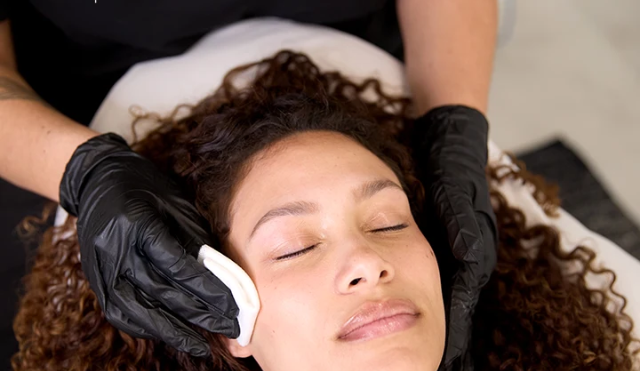
DermLux Chemical Peel Collection
Resurface. Refine. Reveal healthier-looking skin.
The DermLux Chemical Peel Collection offers personalized professional exfoliation designed to improve the appearance of uneven tone, texture, congestion, pigmentation, and visible signs of skin aging.
Rather than selecting a peel based on a single concern, we evaluate your skin health, sensitivity, treatment history, and goals to determine the most appropriate approach for your skin.
Your Skin. Your Plan.
Chemical peels are not one-size-fits-all. Your treatment is thoughtfully selected and customized according to your skin's current condition, concerns, and tolerance—with a focus on progressive skin improvement and long-term skin health.
What Is a Chemical Peel?
A professional chemical peel is a skin-resurfacing treatment that uses carefully selected exfoliating ingredients to encourage the shedding of damaged surface cells and support a smoother, brighter, more even-looking complexion.
Depending on the formulation selected, chemical peels can be used to address concerns such as uneven skin tone, pigmentation, acne and congestion, rough texture, dullness, and visible signs of aging.
At DermLux, your peel is selected based on your individual skin assessment rather than choosing a treatment solely by name or strength.
Personalized Peel Options
Different skin concerns require different approaches.
Your DermLux provider will select the appropriate peel based on your skin assessment, treatment history, and goals.
Sensitive Skin & Gentle Renewal
A gentler resurfacing approach for patients who may benefit from professional exfoliation while requiring additional consideration for skin sensitivity and tolerance.
May be considered for:
Sensitive skin · Uneven tone · Dullness · Mild texture concerns · General skin renewal
Pigmentation & Uneven Tone
A corrective approach designed for patients concerned with visible discoloration and uneven-looking skin tone.
May be considered for:
Hyperpigmentation · Sun-related discoloration · Uneven tone · Dullness · Visible signs of photoaging
Acne & Congestion
A clarifying approach for skin prone to congestion, breakouts, excess oil, and post-acne discoloration.
May be considered for:
Acne-prone skin · Congestion · Excess oil · Uneven texture · Post-acne discoloration
Is a Chemical Peel Right for Your Skin?
Professional chemical peels may be considered for a variety of skin concerns, including:
Uneven skin tone · Hyperpigmentation · Acne and congestion · Post-acne discoloration · Rough or uneven texture · Dullness · Fine lines · Visible signs of sun damage
Not every skin concern—or every patient—is best treated with a chemical peel. Your provider will evaluate your skin and determine whether a peel or another DermLux skin rejuvenation treatment is more appropriate for your goals.
What to Expect After Your Chemical Peel
Your post-treatment experience will vary depending on the peel selected, your skin, and the intensity of treatment.
Some patients may experience temporary redness, dryness, tightness, sensitivity, flaking, or visible peeling as the skin renews. Others may experience little visible peeling while still receiving the benefits of professional exfoliation.
During the recovery period, protecting and supporting the skin barrier is essential. Avoid picking, peeling, or aggressively exfoliating the skin, and follow the post-care instructions provided by your DermLux provider.
Your treatment includes appropriate post-procedure skincare to help support your skin throughout the recovery process.
How Often Should I Have a Chemical Peel?
Chemical peel frequency is individualized according to the formulation used, your skin's response, treatment goals, and the other treatments included in your skin plan.
Some patients may benefit from a planned series of treatments to address a specific concern, while others may incorporate chemical peels periodically as part of an ongoing skin-maintenance plan.
Chemical Peel FAQs
Will my skin actually peel after a chemical peel?
Not necessarily. The amount of visible peeling varies depending on the treatment selected and your individual skin response. Some patients experience noticeable flaking or peeling, while others experience very little. Visible peeling is not the only measure of an effective treatment.
How do I know which chemical peel is right for me?
You don't need to choose your peel before your appointment. Your provider will evaluate your skin, concerns, sensitivities, treatment history, and goals before recommending an appropriate treatment.
Does a chemical peel hurt?
Sensation varies depending on the peel selected and individual skin sensitivity. You may experience temporary warmth, tingling, or stinging during application. Your provider will monitor your skin and comfort throughout treatment.
How much downtime should I expect?
Downtime varies according to the treatment selected and your individual skin response. Temporary redness, dryness, tightness, sensitivity, flaking, or peeling may occur.
Your provider will discuss what to expect from your specific treatment and provide appropriate post-care instructions.
Can I wear makeup after my chemical peel?
Your provider will give you specific instructions based on the peel performed and how your skin responds. In general, the priority immediately following treatment is keeping the skin protected, minimizing unnecessary irritation, and allowing the skin barrier to recover.
Can I combine chemical peels with other DermLux treatments?
Chemical peels can potentially be incorporated into a broader skin rejuvenation plan, but treatment timing matters.
Your provider will determine the appropriate sequence and interval between treatments such as Diamond Skin Renewal, microneedling, facials, or other aesthetic procedures based on your skin and treatment goals.
Who should not receive a chemical peel?
Chemical peels may not be appropriate for everyone. Certain medications, active skin conditions or infections, open or irritated skin, recent procedures, pregnancy status, and other health or skin factors may affect whether treatment is appropriate.
Your health history and skin will be reviewed before treatment to identify potential contraindications and determine whether a chemical peel is appropriate for you.